Queer Places:
Harvard University (Ivy League), 2 Kirkland St, Cambridge, MA 02138
General Theological Seminary, 440 W 21st St, New York, NY 10011, United States
The Society of Saint John the Evangelist, 980 Memorial Dr, Cambridge, MA 02138
Spring Grove Cemetery, 4521 Spring Grove Ave, Cincinnati, OH 45232, United States
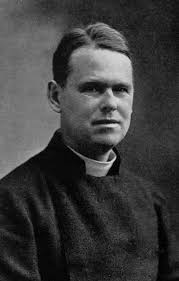 Spence Burton (October 4, 1881 - February 15, 1966) was born into an old and wealthy Cincinnati family on October 4, 1881, the son of Caspar Henry Burton
and Byrd Spence Burton. After attending high school in Cincinnati alongside future associates like
Stewart Mitchell, Burton entered Harvard University, graduating in the Class of 1903. During his
undergraduate years in the English department, he formed deep, lasting bonds within a vibrant Harvard circle. His close relationship with classmate
Harry Dana—an eventual Communist and academic—was built on a shared intellectual intimacy, as
evidenced by warm correspondence in which Burton expressed deep affection, personal confidence, and humorous reflections on their studies under Professor
Barrett Wendell. Immediately following his graduation from Harvard, the adventurous and worldly young Burton took a job as a cub reporter for the New
York Daily News, famously joking later that his only complaint about the tabloid post was that his salary never quite exceeded his bar bill at the
Harvard Club of New York.
Burton soon found a deeper calling, entering New York’s General Theological Seminary and being ordained an Episcopal priest in 1908. He joined the
Society of St. John the Evangelist (SSJE), also known as the Cowley Fathers or the "Anglican Jesuits," a monastic order operating under strict vows of
celibacy. Burton brought immense vigor and private financial resources to the order, establishing strong ties back to Harvard by self-funding and
building the magnificent monastery church on the banks of the Charles River in Cambridge, which remains the order’s primary American home. Known as both
a wit and a charmer with a high-strung aesthetic sense, he served in various ministerial roles, including a parish assignment in San Francisco during the
early 1920s. There, he established a prison ministry at San Quentin State Prison, humorously founding the "San Quentin Harvard Club" for incarcerated
alumni and remarking that he felt most useful and happiest as a priest while serving behind bars.
Throughout his life, Burton was a central figure connecting a broader network of intellectuals, artists, and Anglo-Catholics around Harvard and
Boston, including figures like Ralph Adams Cram,
Fletcher Steele, Thomas Whittemore,
John Wheelwright, Stewart Mitchell, and Catherine Huntington. At the Cowley mission church of St. John’s on
Beacon Hill, Burton showed a progressive social mindset. Notably, during the night preceding the execution of Sacco and Vanzetti, he famously refused a
police order to evict a large group of anarchist supporters whom Huntington had arranged to shelter at the church. Burton rose steadily through the
ecclesiastical hierarchy, serving as Suffragan Bishop of Haiti—where historical documentation regarding his private life and sexuality primarily
survives—and later, in 1942, becoming the Lord Bishop of Nassau.
Although Burton observed his monastic vow of celibacy throughout his adult life and presumably never acted physically upon his impulses, his
lifestyle, deep emotional attachments to men, and position as a focal point within early 20th-century homosexual artistic and literary circles were
unmistakable to those around him. Close friends like Stewart Mitchell relied on Father Burton as a trusted confessor, turning to him during times of
profound personal heartbreak. Burton retired after decades of leadership, supported for 34 years by his secretary, Harry Reed Russell, Sr. Returning to
his home city, Bishop Spence Burton passed away at Holmes Hospital in Cincinnati on February 11, 1966, at the age of 84, and was interred four days later
on February 15, 1966, in the family plot at Spring Grove Cemetery.
References:
Other references:
- Massachusetts Historical Society (MHS) Archives, Stewart Mitchell Papers: Contains letters and correspondence between Stewart Mitchell, Spence Burton, Nathaniel Saltonstall, Elizabeth Zaddo, G. S. Sykes, K. Banner, and Lucy Taggart documenting their friendships within an early 20th-century gay circle.
- Douglass Shand-Tucci Manuscripts: Gothic Modernist (unpublished manuscript for Volume 2 of Ralph Adams Cram: Life and Architecture), detailing the Harvard and Beacon Hill homosexual networks involving Father Spence Burton, Ralph Adams Cram, Fletcher Steele, Thomas Whittemore, Catherine Huntington, and John Brooks Wheelwright.
- Harvard University Archives & Library Special Collections, Henry Wadsworth Longfellow Dana (Harry Dana) Papers: Personal correspondence between Harry Dana and Spence Burton from their time as Harvard undergraduates and novices, detailing their ongoing friendship and social connections.
- Harvard Class of 1903 Reports and Records: Biographical updates, class records, and class publications detailing Spence Burton’s involvement in the English department, his early work, and his later institutional ties to Harvard.
- Archives of the Society of St. John the Evangelist (SSJE / Cowley Fathers)
- Episcopal Church & Anglican Diocesan Archives,
- Archives of the Episcopal Diocese of Haiti: Documentation and administrative records regarding Burton's tenure as Suffragan Bishop of Haiti (where surviving documentation concerning his private life and personal background was maintained).
- Archives of the Diocese of Nassau and the Bahamas: Records, official registers, and correspondence covering his appointment as Lord Bishop of Nassau (1942–1962).
- Spring Grove Cemetery Records (Cincinnati, Ohio)
Support this project
This website is a passion project researched, developed, and funded entirely by me. If you find the content valuable and would like to help support the ongoing research and hosting costs, any contribution is deeply appreciated.
Thank you for keeping this independent resource alive!
My books on Amazon: Elisa Rolle's books
BACK TO HOME PAGE
